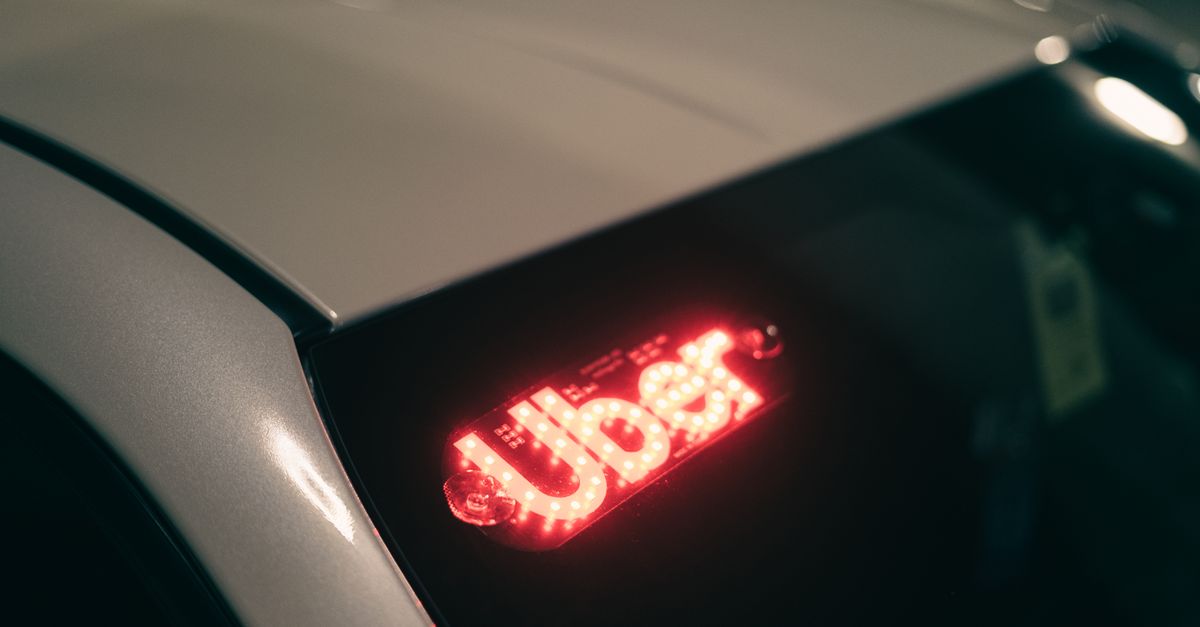
How DoorDash and Gig Workers Track Mileage for Taxes
Delivery apps only report a fraction of your miles. Here's how DoorDash, Uber, and Instacart drivers track every deductible mile automatically for taxes.
If you drive for DoorDash, Uber Eats, Instacart, or any delivery app, you can almost always deduct more miles than the platform reports, but only if you keep your own record. Gig apps only count the miles on an active order. They miss the miles you drive to the restaurant, between deliveries, and while you're online waiting for the next ping. An automatic mileage tracker captures all of it, so you claim every deductible mile at tax time.
Why the Miles in Your Driver App Aren't Enough
Most delivery platforms show an annual mileage summary, but it only reflects on-trip miles: the distance from pickup to drop-off while an order is active. That leaves out a huge chunk of real business driving:
- The drive to the restaurant or store to grab the order
- Repositioning between deliveries
- Circling back to a busy zone while you wait for the next request
At the 2026 IRS standard mileage rate of 72.5 cents per mile, those uncounted miles add up fast. A driver who logs 15,000 total business miles but only sees 9,000 on their platform summary is leaving roughly $4,350 in deductions on the table.
Which Miles Can Gig Workers Actually Deduct?
As a gig driver you're a 1099 independent contractor, which means you report income and deduct vehicle expenses on Schedule C. The deductible window generally runs from your first pickup of the shift through your last drop-off, including:
- Driving between consecutive orders
- Time spent online and available, driving toward demand
What's usually not deductible is the commute from home to the area where you start working, and the drive home after you go offline. The IRS treats those as ordinary commuting. The practical takeaway: track every mile, then let classification sort the business miles from the personal ones. You can't deduct what you never recorded.
For a full breakdown of what counts, see how much you can deduct for mileage.
You Still Need Your Own Mileage Log
A platform's year-end mileage number is a convenience, not an IRS-compliant record. To claim the deduction, the IRS expects a contemporaneous log, one created close to when you drove, with the date, start and end of each trip, the business purpose, and the miles. If you're ever asked to prove your mileage to the IRS, a screenshot of your driver dashboard won't cut it.
This is also why the IRS rate matters beyond just gig work. See the 2026 IRS mileage rate explained.
Manual vs. Automatic Tracking for Gig Drivers
Some free tools ask you to tap "start" before every drive. That works right up until a busy Friday night when you forget, and every forgotten trip is a deduction gone for good. For gig drivers making dozens of short hops a day, manual logging is the single biggest source of lost deductions.
Automatic tracking solves this by detecting drives in the background. We compared the popular options in our mileage tracker alternatives guide, and the pattern is consistent: the miles you don't have to remember to log are the miles you actually keep.
How Smart Miles Works for Gig Work
Smart Miles is built for exactly this kind of driving. It runs in the background and:
- Detects every drive automatically, with no tapping start and no forgotten trips
- Records accurate, road-snapped distance instead of straight-line estimates
- Classifies trips as business or personal so only deductible miles count
- Exports a clean, IRS-ready log for your tax software or accountant
It's free for up to 40 drives a month, or $5.99/mo ($59.99/yr) for unlimited tracking, far less than a single night's worth of missed deductions. If you drive for a living, see how it fits rideshare and delivery work, or read the mileage and tax guide for your platform, then start tracking every mile. The IRS rate is generous; the only thing standing between you and the full deduction is a complete log.
Related articles
Can Mileage Apps Automatically Classify Business vs. Personal Drives?
Yes, modern mileage apps separate business and personal drives automatically using a quick swipe, work-hours schedules, and frequent-route rules. Here's how.

The Longest-Lasting Cars: 25 Vehicles Most Likely to Reach 250,000 Miles
The cars most likely to hit 250,000 miles, from a study of nearly 400 million vehicles, plus what all those business miles are worth at tax time.

What's the Easiest Way to Track Mileage for Work?
The easiest way to track mileage for work is an app that logs every drive automatically with GPS, no buttons, no spreadsheets, no forgotten trips.
Stop leaving money on the road.
Every mile you don't track is a deduction you don't claim. Start tracking automatically today.